
Electra Battery Materials has picked a region for its first US nickel refinery and has not picked a site. The study it filed with the SEC on September 16 uses “a preferred location in the southeastern United States” as its basis.
The first phase would invest $530 million to $675 million, according to the filing. The company says final site selection “remains subject to further assessment, as well as commercial and funding arrangements.”
For a coastal or port-served county in the Carolinas or Virginia, the company has already published most of what it is screening for.
The Plant
The refinery would produce battery-grade nickel sulfate. Electra’s first phase targets about 20,000 tonnes a year of contained nickel, with nickel and cobalt recoveries of 97% or higher.
A second phase could add another 20,000 tonnes a year by recycling battery black mass, the shredded material left from spent batteries. That phase would also recover cobalt, lithium and graphite.
Electra’s chief executive, Trent Mell, framed the project around supply security in June. “North America remains heavily reliant on offshore refining capacity,” he said, calling nickel critical for defense, energy and advanced manufacturing.
What the Site Has to Do
Electra has described its criteria twice. In June, Metal Tech News reported the company was weighing deep-water port infrastructure, proximity to the battery manufacturing corridor, logistics, workforce and supply chain partners.
The September study adds 4 more:
- Access to feedstock and customers
- Utilities
- Permitting requirements
- The ability to accommodate the second-phase recycling expansion
That last item matters for acreage. A site sized for the first phase alone fails the test. The company is asking for room to double.
Why a Port Comes First
The feedstock is imported. Electra plans to refine globally sourced nickel intermediates, known as mixed hydroxide precipitate and mixed sulfide precipitate, with North American mining and recycling supply added over time.
A refinery fed by ship needs to sit near a deep-water port or on a reliable connection to one. That narrows a Southeast-wide search to a much shorter list of places long before any site visit.
The customers likely point the same way. Electra has not named them, but the Southeast’s battery plants, from Georgia through the Carolinas, are the obvious market, and a refinery near both a port and those plants would shorten both ends of its supply chain.
What Is Not Decided
The project is early. The study is a preliminary engineering estimate, and Electra says the next stage is site assessment and permitting before more detailed engineering and “a potential development decision.”
Money is not settled either. The company says it is engaging “with governments on funding programs” without naming any. And its stated first priority is finishing and commissioning its cobalt sulfate refinery in Ontario.
Electra also says it will keep considering alternative locations in North America. The Southeast is the study’s basis, not a commitment.
What It Means for Counties
The published list is specific enough to test a site against: port access, utilities, a permitting path, a workforce, and room for 2 phases of heavy industry. A county can answer those questions from its own files.
The permitting item deserves the most attention. A refinery handling imported chemical intermediates will need state air and water permits, and a county that already knows its state’s timeline for those permits is offering the company something real.
Sources
- Electra Battery Materials, “Electra Advances Phased Nickel Refining and Battery Recycling Strategy for North America,” GlobeNewswire, September 16, 2026.
- Electra Battery Materials, Form 6-K exhibit 99.1, U.S. Securities and Exchange Commission, September 16, 2026.
- Electra Battery Materials, “Electra Receives Extension from NASDAQ to Resolve Minimum Price Requirement,” GlobeNewswire, September 15, 2026.
- Metal Tech News, “Electra sizes up U.S. nickel refinery,” June 10, 2026.
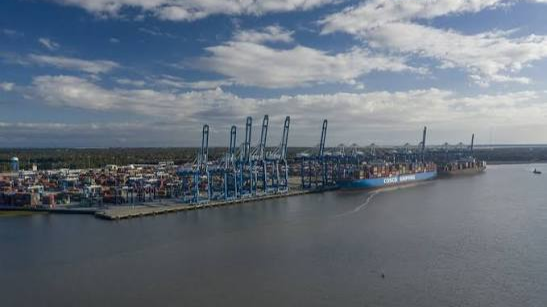
Cover photo: Wando Welch Terminal, Port of Charleston, South Carolina. U.S. Department of Agriculture. Public domain.