
Virginia’s Spanberger Signs Into Law the First-in-Nation Data-Center Power Tax

Virginia enacted the country’s first per-kilowatt-hour data-center consumption tax — $0.011/kWh on all electricity, utility-supplied or behind-the-meter. Georgia, Texas, and Arizona are watching; North Carolina already moved.
Governor Spanberger Delivers $73.5 Billion Data Center Investment

Stack Infrastructure’s $73.5B commitment to the Southern Virginia Megasite at Berry Hill — the largest private capital commitment ever made to a Virginia rural megasite — closed on twenty years of site readiness, not on a state incentive package.
JetZero Breaks Ground in North Carolina: Investing $4.7B and Adding 14,500 Jobs

JetZero picked North Carolina for the largest job commitment in state history — $4.7B, 14,500 jobs, 12 months from site selection to shovel. The reason wasn’t money. It was 20 years of cluster building, build-ready land, and analytical capacity already on the shelf.
Spatial Front Investing $6M and Creating 450 Jobs in Arlington
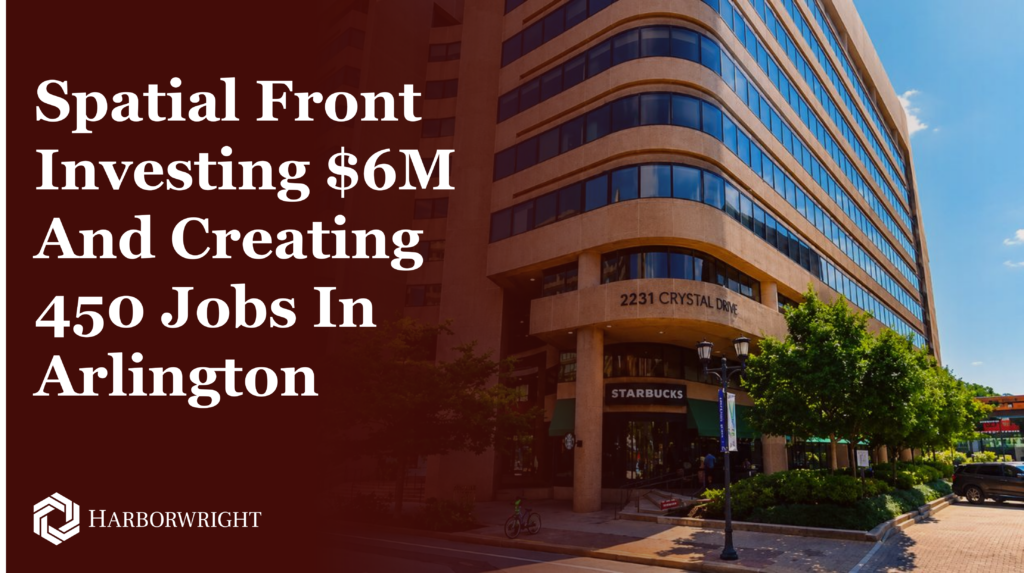
Spatial Front picked Crystal City because the cleared workforce lives there, the federal customer works there, and the cluster of comparable firms operates there. The incentive package was a $500K rounding error.
Why AstraZeneca Invested $4.5B in Virginia

AstraZeneca picked Virginia for its largest single-facility investment in 25 years — $4.5B, 3,600 jobs, 33 days from first meeting to public announcement. The reason wasn’t money. It was speed.
Data Centers Lead Virginia’s Economic Growth
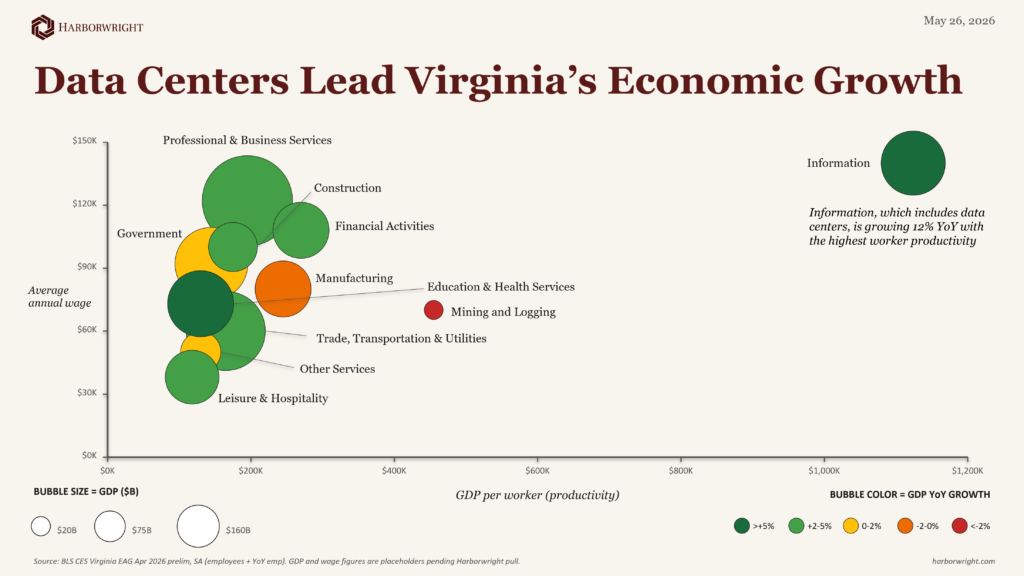
Virginia hit record output in 2024 while losing jobs in 9 of 11 supersectors. The economy is growing without the labor force growing — and Henrico County has shown what to do with the data-center revenue.
Virginia Governor Launches Statewide Economic Development Tour
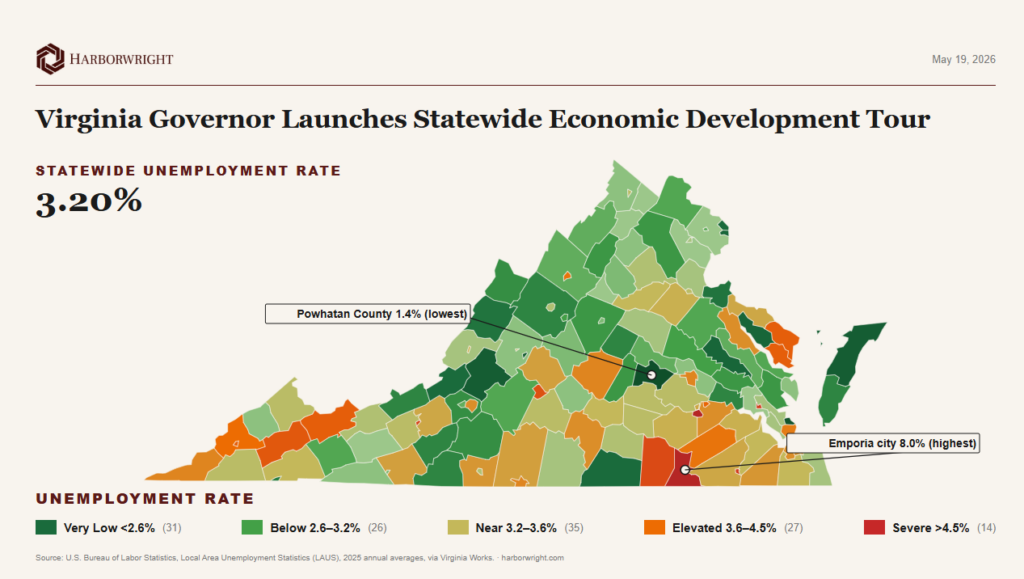
Governor Spanberger’s statewide tour will sort Virginia’s 133 EDOs into tiers. Here’s the labor-market backdrop, the 5-region geography, and what each office needs to bring to the table.
Richmond city ran the third-largest housing deficit in Virginia
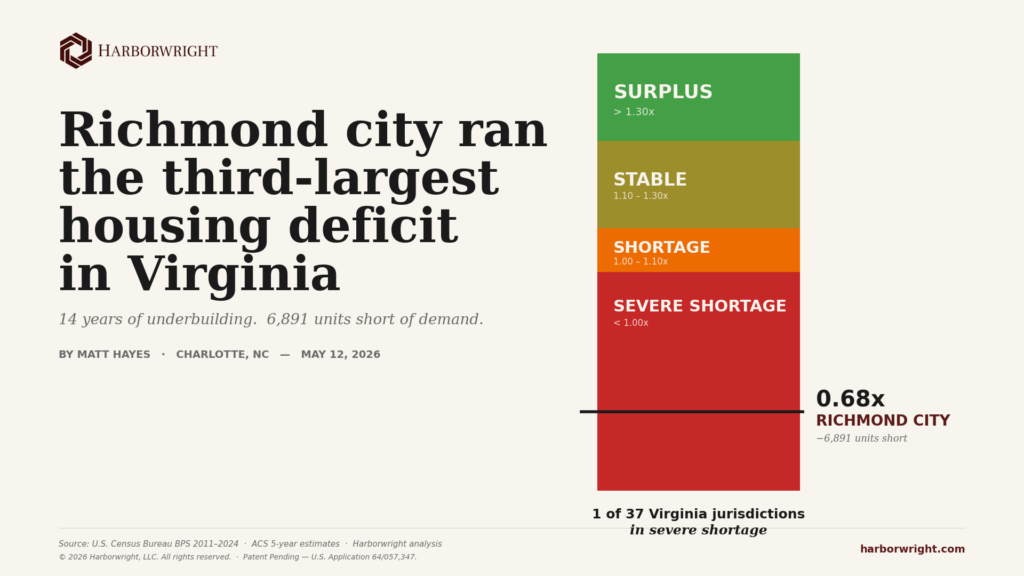
Richmond city ran the third-largest housing deficit in Virginia, with 14 years of under-permitting creating a 6,891-unit shortage that priced out the workforce the city depends on.
Half of Virginia’s growing jurisdictions fail a basic housing supply test
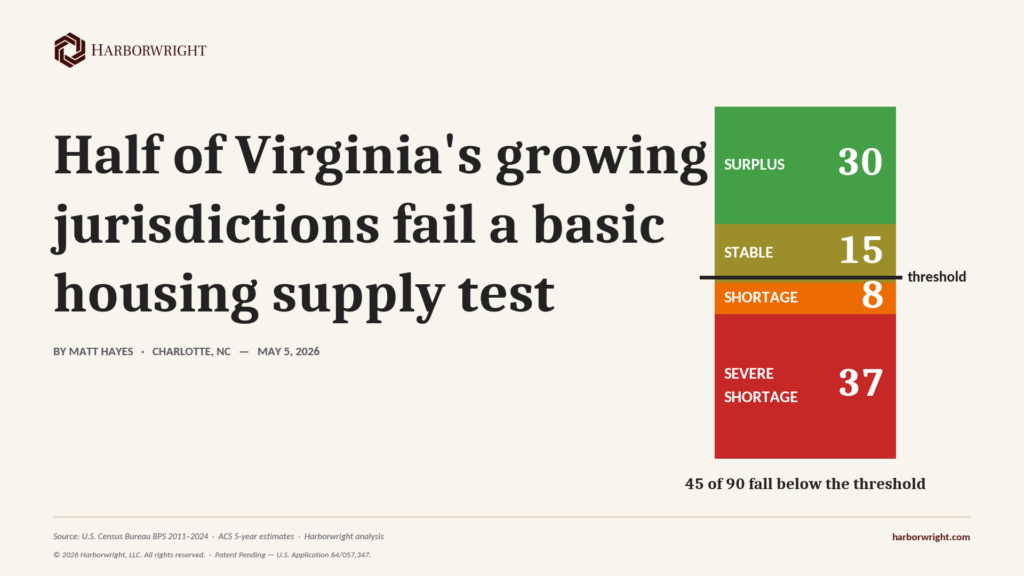
Half of Virginia’s growing jurisdictions are failing the basic housing supply test — permitting fewer homes than household growth requires. The gap is structural, measurable, and fixable.
Who Pays for Virginia’s Power? Electricity Costs, Data Centers, and the Fight Over the Grid
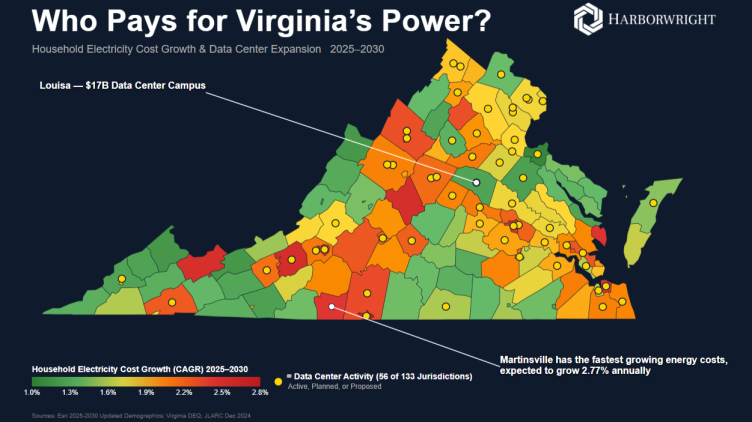
Part 2 of the Virginia Economic Intelligence Series. Housing costs tell one side of the story. Electricity is the other. The average Virginia household is projected to spend $2,059 on power in 2025, climbing to $2,253 by 2030.