
At least 6 nuclear energy companies have told investors since June that they are choosing sites for new US plants. None has named a winner.
The plants range from reactor parts factories to fuel plants and first-of-a-kind power stations. Virginia and South Carolina already host the industry, and counties there start the search with something most places cannot offer: people, regulators and neighbors who already know the work.
Who Is Looking
Holtec, which runs manufacturing plants in New Jersey, Pennsylvania and Ohio, told the Securities and Exchange Commission on September 8, “We are in advanced discussions with several states to build new manufacturing plants within their states.” It did not name the states.
Uranium Energy Corp reported in June that it had identified “a final shortlist of candidate locations” for a uranium conversion plant. It plans to file for a federal license once engineering is complete and a site is selected.
Lightbridge told shareholders on September 8 that it is moving to select a site for its fuel fabrication facility. Terrestrial Energy’s July investor presentation lists site selection for its reactor core-unit and fuel production plants among its expected 2026 milestones.
TAE Technologies, which is merging with Trump Media & Technology Group, said on August 5 that a location for its first fusion power plant “is expected to be sited later this year.” The plant is planned at 50 megawatts, with operations in 2031.
The South Carolina Candidate
At its September 10 investor day, newcleo’s fuel director said Department of Energy discussions had started on an area where the company “could possibly build” a plant for mixed oxide fuel at the Savannah River Site in South Carolina.
The Energy Department selected newcleo in May for advanced negotiations under its surplus plutonium program. The company’s first US reactor, planned at 200 megawatts for 2032, has no site yet.
The Savannah River Site covers 310 square miles in Aiken, Barnwell and Allendale counties, and the Department of Energy owns it.
The Head Start
South Carolina also makes nuclear fuel today. Westinghouse’s Columbia Fuel Fabrication Facility in Hopkins, in Richland County, won a license renewal through 2062. The company said in 2022 that the plant employs more than 850 people.
The state’s biggest unfinished nuclear asset is back in play. Santee Cooper, Brookfield and The Nuclear Company are evaluating completion of the 2 halted AP1000 reactors at V.C. Summer. Definitive agreements have not been signed, according to the American Nuclear Society.
Virginia’s cluster sits around Lynchburg, home to BWX Technologies and Framatome. Dominion Energy runs 4 reactors at North Anna in Louisa County and Surry in Surry County, and nuclear supplies nearly 32% of the state’s power, according to the Virginia Secretary of Commerce and Trade.
North Carolina has a stake as well. GE Vernova announced in January 2025 that it would invest more than $50 million in its Wilmington site, which makes reactor fuel.
The Local Question Comes First
Campbell County, Virginia shows what the host role looks like up close. Appalachian Power wants to build a small modular reactor at its Joshua Falls substation and asked the county to create an “industrial intensive” zoning district that would allow small reactors by right.
In July supervisors chose to hire outside experts before deciding. If the county adopts the district, it would be the first in Virginia. Appalachian Power does not expect the reactor to run before the mid-2030s.
That is the order of events most counties should expect. The zoning, public hearing and utility questions arrive before any company names a site, and a county that has worked through them is easier to choose.
What It Means for Counties
Most of these companies have published few site criteria. What they have in common is a need for a licensed, security-conscious workforce, a community willing to host the work, and a state that already regulates it.
Counties near Lynchburg, Aiken, Columbia and Wilmington hold those advantages today. For a county outside those clusters, the useful work is quieter: knowing its zoning answer, its power and water position, and its public’s appetite before a nuclear prospect asks.
Sources
- Holtec, Form S-1/A registration statement, U.S. Securities and Exchange Commission, September 8, 2026.
- Uranium Energy Corp, Form 8-K exhibit on Uranium Royalty & Conversion update, June 9, 2026.
- Lightbridge, shareholder letter, Form 8-K exhibit 99.1, September 8, 2026.
- Terrestrial Energy, investor presentation, Form 8-K exhibit 99.1, July 2026.
- TAE Technologies and Trump Media & Technology Group, Form 425, August 5, 2026.
- newcleo, Analyst and Investor Day transcript, Form 425, September 10, 2026.
- U.S. Department of Energy, Savannah River Site, “Where We Are.”
- Westinghouse Electric Company, “Looking to 2062: Westinghouse Continues Fuel Production in South Carolina,” September 12, 2022.
- American Nuclear Society, Nuclear Newswire, “Joint venture formed with a focus on finishing Summer-2 and -3,” May 5, 2026.
- Virginia Secretary of Commerce and Trade, VA Nuclear.
- World Nuclear News, “GE Vernova to invest in North Carolina fuel operations,” January 31, 2025.
- WDBJ7, “Campbell County supervisors agree to hire experts before making decision on small nuclear reactors,” July 7, 2026.
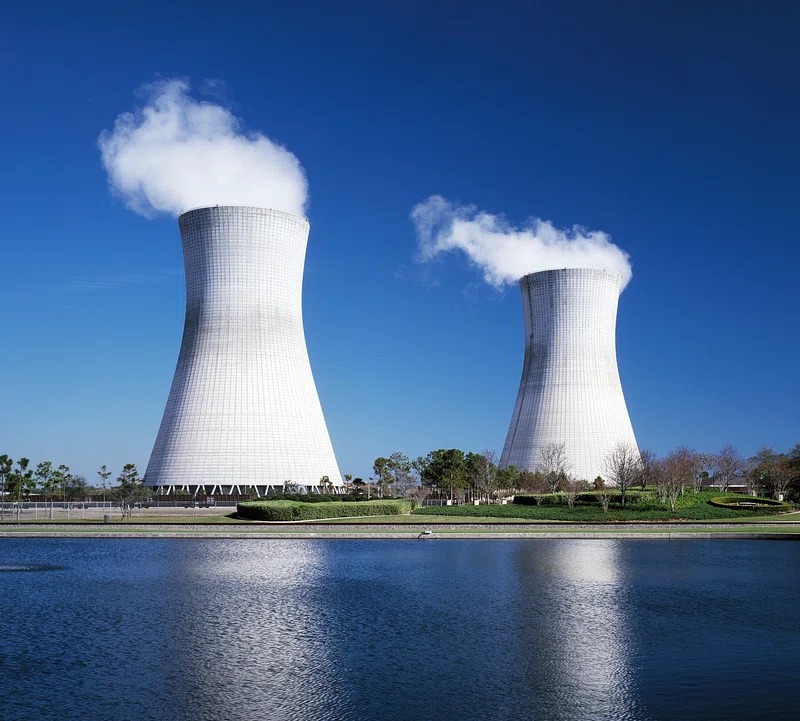
Cover photo: Nuclear plant cooling towers. Photo by Carol M. Highsmith, via rawpixel.