
Richmond city ran the third-largest housing deficit in Virginia
Richmond city ran the third-largest housing deficit in Virginia, with 14 years of under-permitting creating a 6,891-unit shortage that priced out the workforce the city depends on.
Half of Virginia’s growing jurisdictions fail a basic housing supply test
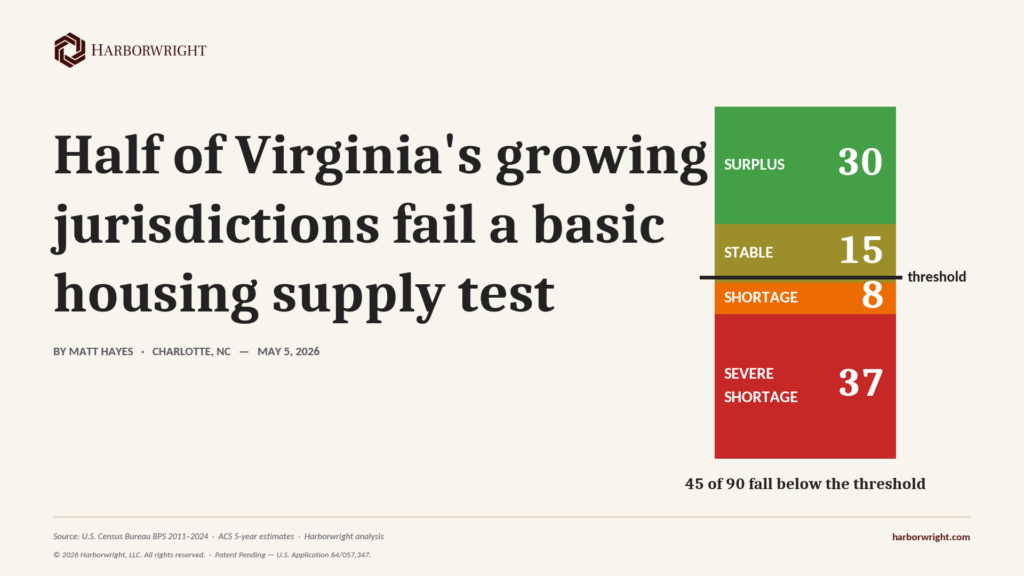
Half of Virginia’s growing jurisdictions are failing the basic housing supply test — permitting fewer homes than household growth requires. The gap is structural, measurable, and fixable.
Henrico County is leading Virginia when it comes to issuing housing permits
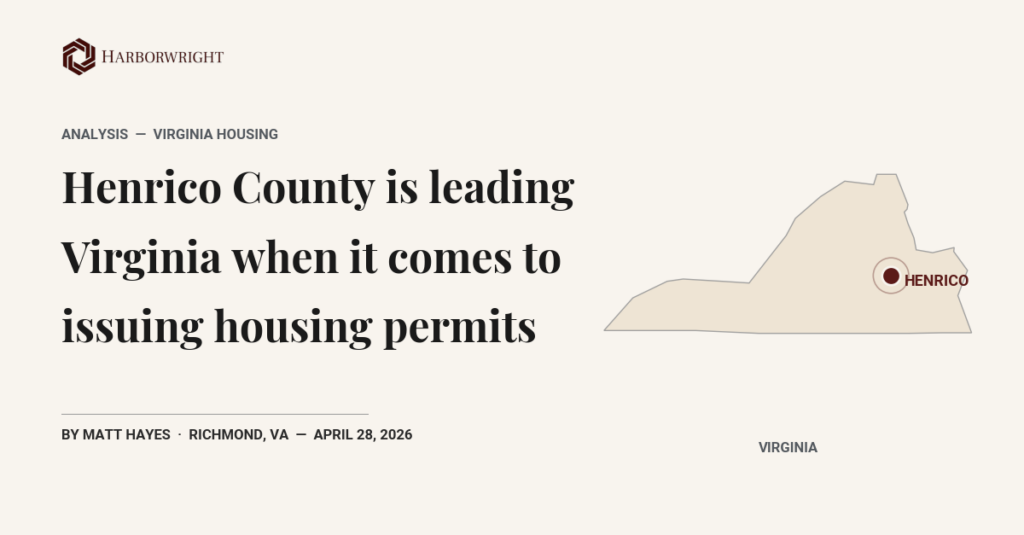
THE PROBLEM Most of Virginia’s urban counties are running housing permit shortages against measured household growth where it matters most for the state’s workforce. Between 2010 and 2024, Loudoun fell 6,949 units short of net new households. Prince William: 11,053 short. Richmond city: 6,891. Alexandria: 3,373. Chesapeake: 3,242. Virginia Beach: 3,176. Newport News: 2,065. Hampton: […]
Half of Virginia renters can’t afford Virginia
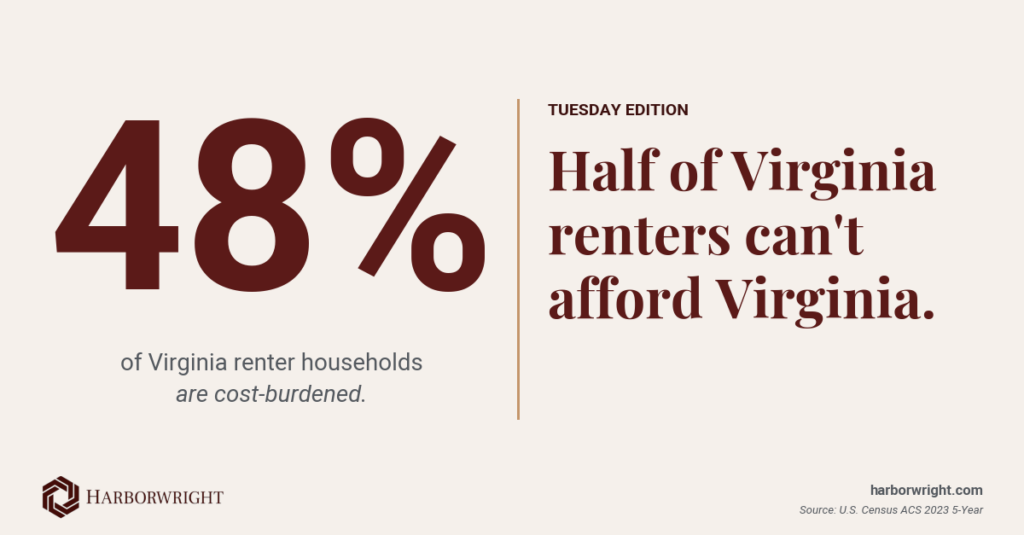
Nearly half of Virginia’s renter households are cost-burdened and some communities are much higher than the state average. The math behind a 50% rent ratio. When half of a paycheck goes to rent, the rest of a life starts to buckle quietly. Dining out at restaurants becomes risky. Emergency funds deplete. The retirement contribution stops. […]
Who Pays for Virginia’s Power? Electricity Costs, Data Centers, and the Fight Over the Grid
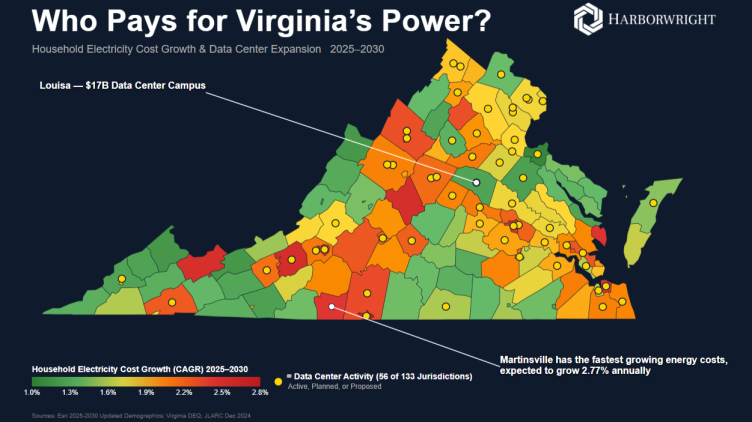
Part 2 of the Virginia Economic Intelligence Series. Housing costs tell one side of the story. Electricity is the other. The average Virginia household is projected to spend $2,059 on power in 2025, climbing to $2,253 by 2030.
Virginia Housing: Where We Are, What’s Changing, and What Comes Next
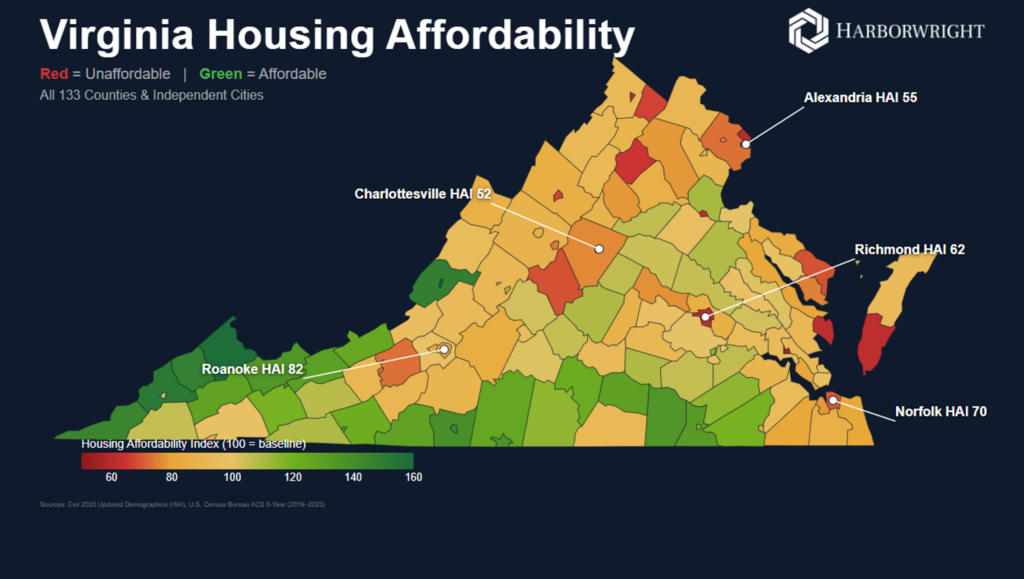
Virginia housing affordability did not become a problem overnight. It was built over a decade of rising construction costs, lagging production, wage growth that could not keep pace with prices, and zoning frameworks never designed for today’s demand pressures.
The Economic Development Model Is Broken

Over the past four years, I have worked with EDOs across the U.S., Canada, and Europe on multi-generational decisions. The data they need exists, but the intelligence they need is buried — and the firms they pay six figures to surface it are taking 5 to 11 months to deliver.
Data Centers Are a National Security Priority, but the Department of Homeland Security Ignores Them

Despite their essential role in storing and delivering digital services across sectors, data centers are not explicitly designated by the Department of Homeland Security (DHS) as critical infrastructure. Instead, they are broadly grouped under the Information Technology (IT) and Communications sectors². The Department of Homeland Security’s failure to explicitly classify data centers as critical infrastructure is a blind spot with enormous national-security and economic consequences.
Real Estate Doesn’t Produce Income, It Produces Expenses

Real estate is often described as a “passive income” asset, a phrase repeated endlessly in books, podcasts, and ‘Mastermind’ courses. But this narrative misunderstands what actually generates income.
From an accounting and financial perspective, the physical assets (land, structure, improvements, etc.) do not produce revenue. They produce expenses on the financial statements.
Tariffs Surge Warehouse Demand in the Short-Term

On October 10, 2025, President Trump announced a sweeping new 100 % tariff on imports from China, stacking atop existing duties, effective November 1.¹ This unexpected move jolts global trade flows and immediately pressures supply chains. For the industrial real estate sector, particularly warehouses and distribution facilities, the short-term implications will likely increase demand from a temporary shock.